.png)


Our approach
Finding the right awareness channels
With so many possible channels - how do you reach your ideal customers? Google Ads, cold outreach, events, content, partnerships. It can feel overwhelming to choose.
At Mayfly, we use a clear process to identify, prioritise, and execute on finding effective awareness channels for your AI venture.
We begin by zooming out. We identify every realistic way your Ideal Customer Profile (ICP) could already be reached.
This means asking questions like:
- Where does my ideal customer already spend time, in person and online?
- Which digital channels are they actively paying attention to?
- How might your existing network provide access or early visibility?
At this stage, the goal is coverage, not selection. We want a complete picture of where attention could be captured before narrowing focus.
Not every channel is right for every venture.
We prioritise channels by looking at:
- How closely the channel aligns with your ICP’s behaviour
- How many of your ICP are active in the channel
- How clearly can your key messages be communicated there
- Your ability and resources to execute the channel properly
- Expected effort compared to potential return
This ensures focus and effort is placed where traction is most likely, without overextending resources.
Rather than launching everything at once, we organise channels into a deliberate rollout.
Some channels are better suited to early-stage learning and validation. Others perform best once messaging, product, and proof are more established. Sequencing channels helps manage effort, control spend, and ensure each channel has the conditions it needs to work.
Each channel behaves differently. They each require a different strategy and tactic.
A Google Ads campaign, a LinkedIn content strategy, and a webinar series all demand different messaging, formats, pacing, and success metrics. For each selected channel, we design a specific strategy that’s tailored to how that channel actually works and how your ICP engages with it.
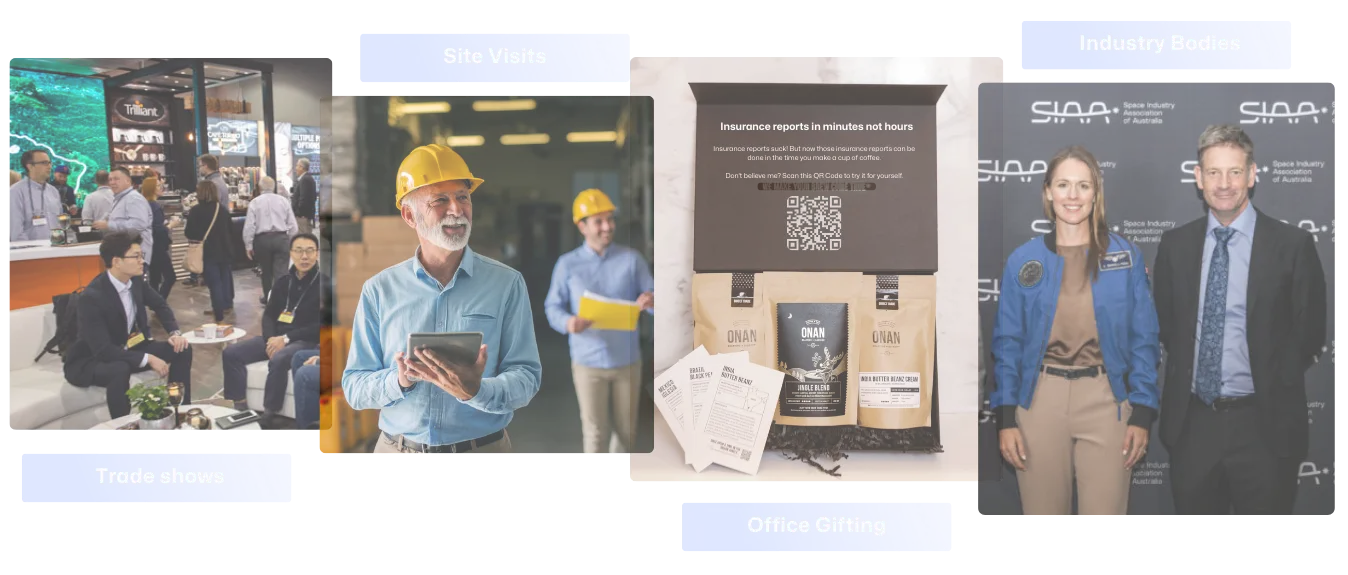
Types of awareness channels
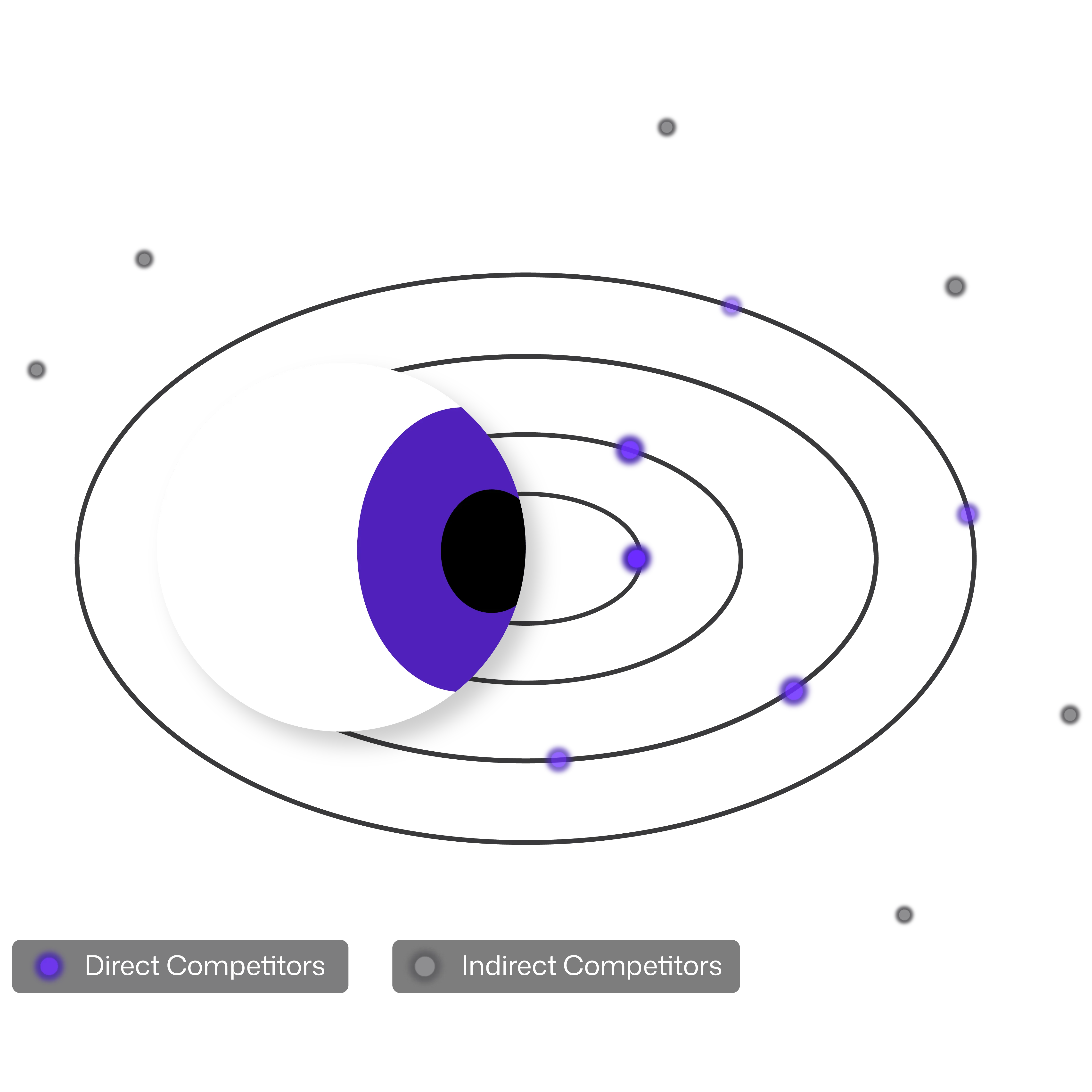
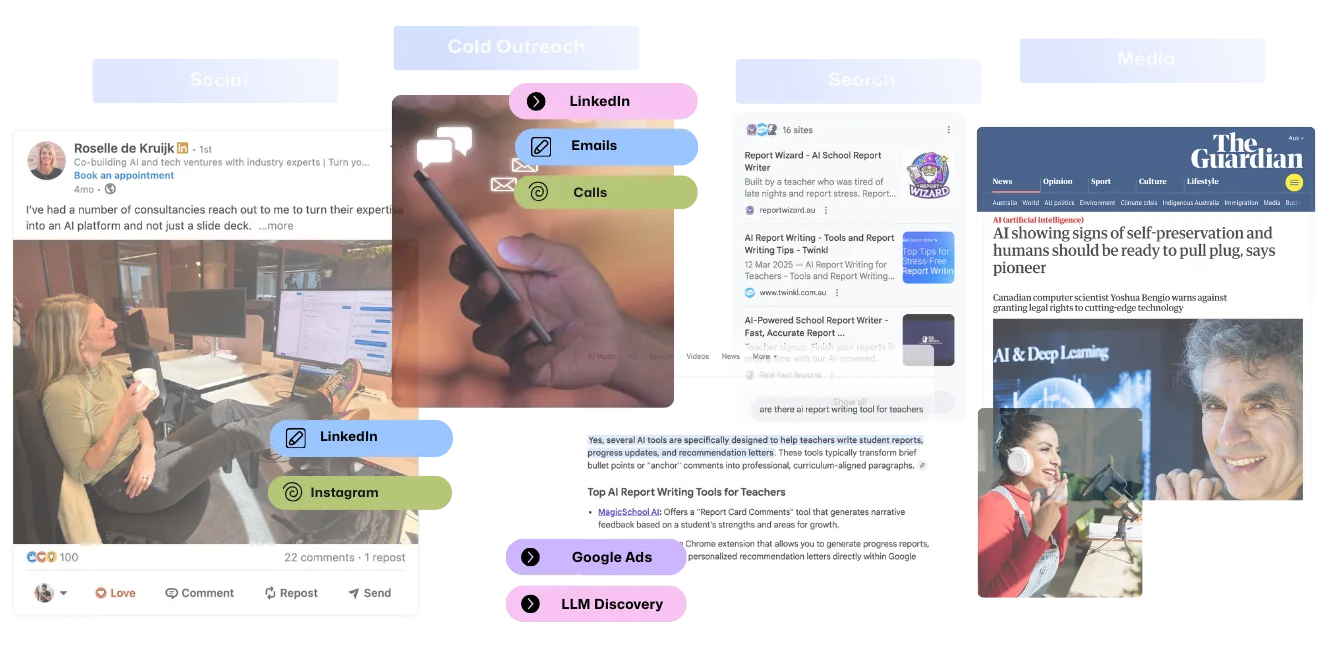
Awareness channels can take many forms: digital, non-digital, paid, and organic. We take the time to explore the full landscape before deciding which channels are worth pursuing. The right mix depends on your customer, your access, and the stage of the venture.


Who we are
Built to partner, not just build
Mayfly helps you turn your AI idea into an industry-transforming venture.
As a venture studio, we bring product insight, go-to-market strategy, technical execution, and network into one integrated team, with shared ownership from the start.
We partner closely with a select group of ventures, validating what matters, reducing risk early, and giving founders clarity and confidence at every stage.

Build your strategic roadmap
Uncover the risks, commercial opportunity and strategy for success so you can build your venture with clarity and confidence.
$15,000
UVP
- UVP Definition
- Customer Discovery
- Problem/ Solution Analysis
- Competition Analysis
GTM
- Phased GTM Roadmap
- Channel discovery
- Funnel Design
- Messaging framework
- Business Model Strategy
Product
- Phased Product Roadmap
- Product Scope and Quote
- Product Hypothesis
- User Journey Mapping
Bring your idea to the table
Book a complimentary strategy session with our team
If you’re an industry expert thinking about how AI could genuinely improve the way things work in your field, we’d love to hear about it.
The first discussion is simply a chance to talk through the opportunity, find some clarity, and see if there’s a fit on both sides. Early ideas are welcome.
FAQs
Awareness channels focus on creating visibility, while conversion channels focus on moving prospects to take action. A balanced GTM strategy ensures that awareness channels like content marketing and PR feed into conversion channels like paid ads or direct outreach, creating a clear and efficient path from interest to conversion.
The channel strategy is deeply integrated into the funnel design. Awareness channels attract potential leads, while the funnel design ensures there are clear stages for converting them to paying customers. A strong sales funnel with well-defined stages, automations, and optimised messaging will help convert leads from awareness channels into committed users.
Scaling a channel strategy typically happens when consistent data shows it's delivering solid results in terms of conversion rates and ROI. As your venture evolves, the channel mix may need to shift. Continuous data analysis and A/B testing help to identify when a channel is ready to scale or when it's time to adjust.
We track key performance metrics for each channel, such as lead generation, conversion rates, and customer acquisition cost (CAC). We measure how well each channel delivers the right audience and how it converts into tangible results (demos, trials, sign-ups). Regular data reviews allow us to fine-tune strategies.
We start by understanding where your ICP spends their time and how they typically consume content or engage with products. This includes reviewing market research, customer surveys, and competitor analysis. The right channels are those that allow you to deliver your key messages effectively while providing a high ROI.
Every channel strategy is tailored to the specific venture. A typical roadmap may start with leveraging the founder network, early partnerships, and building LinkedIn presence. As the product launches, paid acquisition channels like Google Ads can be added alongside cold outreach. The key is consistently doing experiments and finding what works best.
Yes, time and budget constraints play a key role in channel selection. We tailor the GTM strategy and channel roadmap to fit the resources available. For example, high-touch channels like personal outreach might be appropriate for early-stage ventures, while paid acquisition may become viable as traction builds.
Market access as an industry insider can significantly accelerate traction, however, other channels can also be leveraged to build visibility and credibility. Mayfly typically partners with founders who have strong industry access, as this can be an important factor when we consider entering a long-term partnership.
Digital marketing can be very effective for B2B AI ventures. LinkedIn is a key platform for engaging directly with your ICP. Cold outreach via email and LinkedIn is still effective, especially in early stages. As you move into enterprise sales, relationship-building typically becomes more critical than digital marketing alone.
At Mayfly, we begin by deeply understanding your ICP and market dynamics. We then prioritise channels based on cost, reach, and effectiveness, and build out a clear strategy for each channel, defining objectives, key metrics, and tactical plans for execution.
The channels strategy sits within the broader Go-To-Market (GTM) strategy, which is built upon your Unique Value Proposition (UVP). Every channel decision is strategically aligned with both your UVP and GTM goals to maximise traction and growth.
Answer This is for the channels

