.png)


How Mayfly designs funnels
A well-designed conversion funnel removes friction, builds trust, and supports decision-making at every stage. We focus on designing journeys for AI products, optimised from engaged first user to loyal advocate.
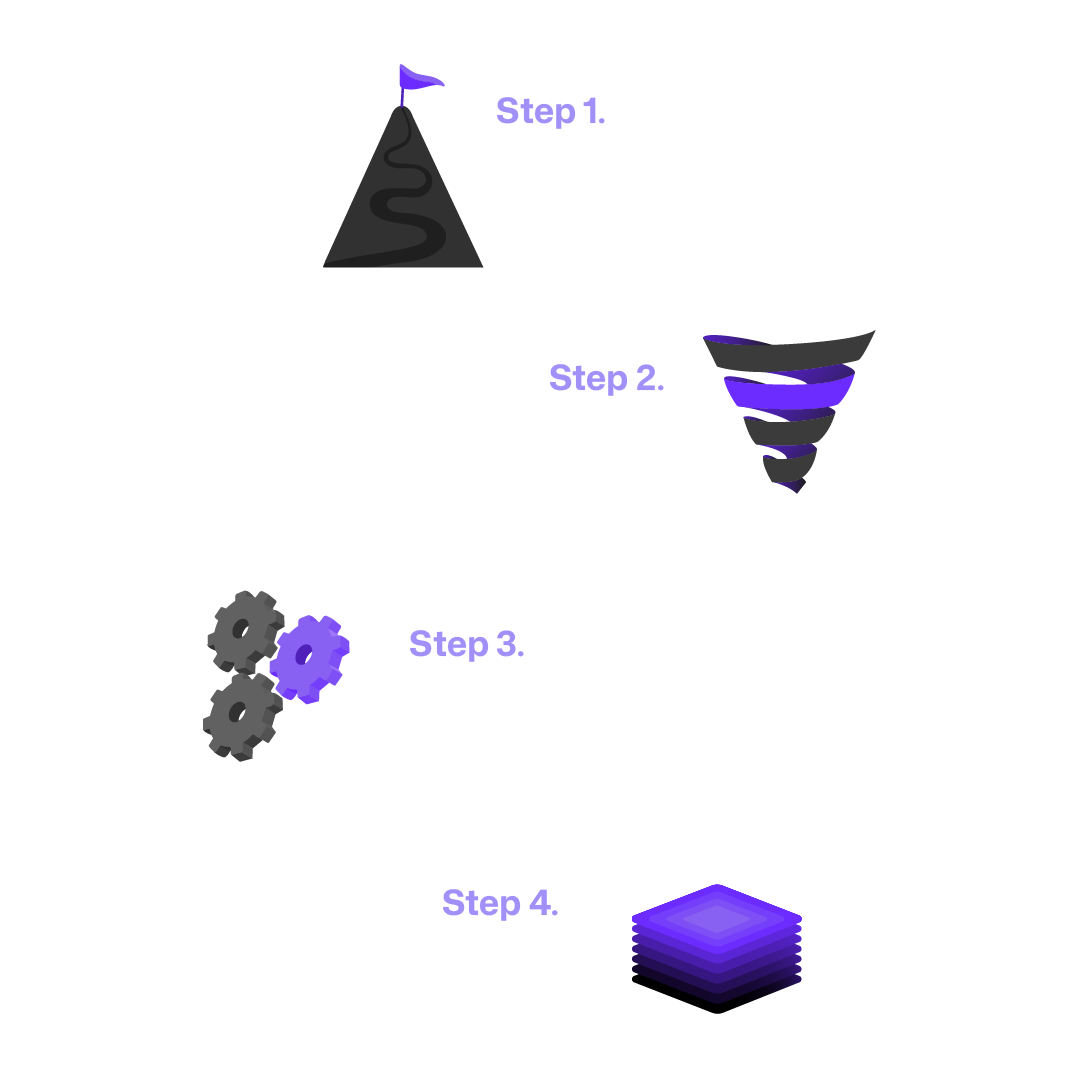
We take a structured, step-by-step approach to funnel design, breaking down the process into 4 clear stages.
We start by really understanding how your Ideal Customer Profile actually buys.
Here we’re mapping:
- How much education is required before a purchase decision
- How much sales involvement is needed
- What customers are comfortable buying without human interaction
- Where trust is built and where friction appears
From this, we can create a clear customer journey map. It could look like:
Aware → Demo call → Follow-up → Purchase → Onboarding
Not every venture follows the same steps. The goal is to design a journey that reflects real buying behaviour, not assumptions.
Once the journey is mapped, we focus on optimising conversion at each stage.
Rather than treating the funnel as static, we design it as a system that improves over time. This means collecting data, understanding drop-off points and using technology to personalise the experience.
For example, if demo no-shows are high, we don’t accept that as inevitable. We might introduce a call-warming email or nurturing sequence that reinforces value, answers common questions and builds momentum before the meeting.
Small, thoughtful improvements at each stage compound into meaningful gains across the entire funnel.

A funnel only performs as well as it is executed.
We define clear Standard Operating Procedures (SOPs) that document how the funnel operates day-to-day.
This includes:
- When and how leads are followed up
- How demos are run and followed up
- What happens after a customer converts
- How feedback and insights are captured
These SOPs ensure consistent and reliable work - allowing the funnel to scale, rather than relying on individual effort, ‘winging it’, or informal knowledge.
Conversion improves when the customer journey feels relevant and well-timed.
We design funnels that use technology to personalise messaging, automate key touchpoints and support decision-making at each stage of the customer journey.
This may include behaviour-triggered follow-ups, personalised nurturing sequences, dynamic content by segment or use case, and automated reminders that reduce friction and drop-off.
Alongside this, we define the supporting technology stack required to deliver the funnel end-to-end. This typically includes CRM, marketing automation, analytics and customer engagement tools that work together cleanly and provide full visibility across the journey.
The goal is not over-automation, but a simple, integrated system that improves conversion and scales as the venture grows.



Who we are
Designing with you from day one
Mayfly helps you turn your AI idea into an industry-transforming venture.
As a venture studio, we bring product insight, go-to-market strategy, technical execution, and network into one integrated team, with shared ownership from the start.
We partner closely with a select group of ventures, validating what matters, reducing risk early, and giving founders clarity and confidence at every stage.

Build your strategic roadmap
Uncover the risks, commercial opportunity and strategy for success so you can build your venture with clarity and confidence.
$15,000
UVP
- UVP Definition
- Customer Discovery
- Problem/ Solution Analysis
- Competition Analysis
GTM
- Phased GTM Roadmap
- Channel discovery
- Funnel Design
- Messaging framework
- Business Model Strategy
Product
- Phased Product Roadmap
- Product Scope and Quote
- Product Hypothesis
- User Journey Mapping
Let’s map the journey for your AI venture
Book a complimentary strategy session with our team
If you’re exploring an AI venture and want clarity on how to design a funnel that fits your market - let’s talk.
The first conversation is about understanding your venture, your sales model, and whether we can help you turn early engagement into long-term loyalty.
FAQs
Funnel strategy sits within the broader GTM strategy, which itself is built upon the UVP. The funnel is an essential part of the GTM plan, guiding customers from awareness to conversion. The funnel also converges with product strategy, as onboarding and customer satisfaction are key stages in the overall customer journey.
Mayfly helps design the sales funnel strategy by aligning it with your UVP and GTM strategy. We focus on defining the funnel stages, identifying the right channels, and optimising conversion paths. We work with trusted partners who can support sales automation, lead generation, and performance marketing.
To analyse drop-off points, track key metrics such as click-through rates, conversion rates, and user behaviour at each funnel stage. A/B testing different versions of content, CTAs, and user flows can help identify where users are losing interest. Then prioritise improving the weak conversion point.
Designing an effective sales funnel starts by mapping out the stages your customers move through: awareness, consideration, conversion, retention, and advocacy. By aligning messaging, content, and features with your ICP, the funnel can effectively guide prospects toward becoming paying users.
Effective lead generation starts with a solid UVP strategy and is strengthened by integrating the right awareness channels, messaging strategy, and tactics. Key questions include: Where does our ICP congregate? How do they consume media? Who in our network can help us reach them?
The typical sales funnel for an AI venture includes: Awareness (learning about your solution), Consideration (evaluating your platform through demos and trials), Conversion (becoming paying customers), and Retention (keeping customers engaged through support and product updates).
A sales funnel is a structured process that guides potential customers through awareness, consideration, and decision-making stages, eventually leading them to become paying customers. Understanding and optimising your funnel improves efficiency and predictability in acquiring and retaining customers.

