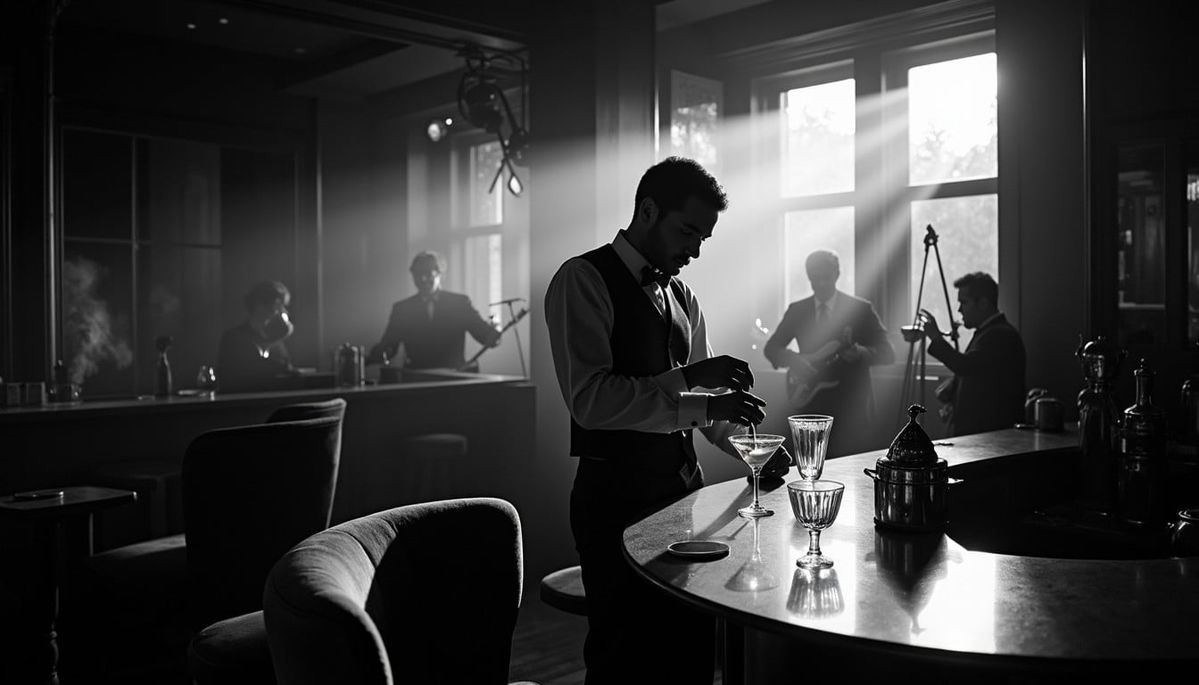
AI in hospitality: shifts, payments and loyalty on a busy night.
For Australian venues, hospitality groups and the businesses that serve them, AI and well-built systems create commercial value where staffing, payments, loyalty and rostering still cost margin on the busiest nights. It pays when it works at the bar with a queue in front of it. Where to start, what it takes, and two built examples.
Updated 23 October 2026 · Mayfly Ventures, Melbourne
A busy night · payments, shifts, loyalty
A short conversation
What is costing you the most on a Friday?
Choose what sounds closest to your venues. We will show you where we would look first.
Where we would start
Fill shifts in minutes and pay the moment they clock off.
Venues fill shifts within minutes, workers are paid instantly after the shift, and compliance runs underneath. It works when both sides are present on day one.
Built: Choosey, launched into a community of 90,000 contractors.
Fee-free payments integrated with the point of sale, with rewards attached.
A payment gateway integrated with your POS removes middle-man fees, so a transaction costs the venue and the customer nothing extra, and loyalty rides on it.
Built: Mucudu, 50 users on launch night, past 3,000 within weeks, ten national brand partnerships.
Shifts, payments, loyalty and rosters are where a full Friday leaks money.
The chain of a busy night. The marked steps are where margin leaks and where AI and well-built systems solve it first.
Filling shifts and paying the people who work them. Venues fill shifts within minutes and workers are paid the moment they clock off, with compliance in the background. Choosey launched into an existing community of 90,000 contractors.
Payments and loyalty without middle-man fees. A payment gateway integrated with the point of sale, so transactions cost the venue and the customer nothing extra, with rewards attached. Mucudu went from 50 users on launch night to past 3,000 within weeks, with ten national brand partnerships.
Rostering and compliance. Awards, visas, inductions and certificates checked when the roster is built, not when the audit arrives.
Demand and stock from the data already there. Point of sale and booking history turned into next week's order and roster, reviewed by the manager rather than guessed by them.
Guest communication that knows the booking. Confirmations, changes and follow-ups drawn from the reservation system, not typed on a Saturday afternoon.
02Not firstWhat to leave alone
Three places hospitality money has gone before and not come back.
Each has been tried by venues and founders. None of them pays first.
A directory or an app without payments. The first Mucudu build offered a venue directory and a gift feature; without integrated payments, venues and investors stayed away and $400K went into a product that stalled.
A marketplace with one side missing. Staffing marketplaces fail when workers turn up before venues or the other way round. Choosey worked because 90,000 contractors were already there.
Replacing front-of-house with screens. Margin comes from the busiest night running smoothly, not from removing the people who run it.
03The testA busy night
What a busy night actually tests.
Hospitality margins are decided on the nights the venue is full. A payment that takes an extra ten seconds, a shift that is not filled or a loyalty scheme the bar cannot run costs more that night than a quiet month saves.
Workers wait to be paid and venues wait to fill shifts; both problems have the same shape and the same fix, instant and automatic, with compliance underneath.
So the test is not a demo. Mucudu's payment flow was confirmed in live service on a busy night, and Choosey was load-tested beyond several thousand concurrent sessions before launch.
04BuiltChoosey and Mucudu
Two built examples: Choosey and Mucudu.
Choosey is a hospitality staffing marketplace. Workers are paid instantly after a shift, venues fill shifts within minutes, and compliance runs in the background. It was built on top of an existing community of 90,000 contractors, so supply and demand were both present at launch, and load-tested for a busy Friday before it opened. Read the Choosey case study.
Mucudu is a hospitality rewards platform: loyalty, fee-free payments and venue discovery, rebuilt from scratch after an earlier build stalled. A custom payment gateway integrates with leading point-of-sale systems and removes middle-man fees. 50 users on launch night, past 3,000 within weeks, and ten national brand partnerships.Read the Mucudu case study.
05How it worksUnderstand · Deliver · Evolve
How it works for a venue group.
We help established businesses identify where AI can create commercial value, then bring strategy, design and engineering together to deliver it.
Understand, two weeks. We work with the people who run the work day to day: how the business operates, where the knowledge sits, what systems and data exist, and what result would make the investment worthwhile. You leave with a prioritised opportunity, an initial commercial case and a recommended first move.
Deliver. The same commercial case continues through product definition, design and engineering. Your experts stay involved; the system is tested with real users and implemented into the business.
Evolve. Once it is live, it is improved, rolled out to more teams or extended where the next opportunity appears. See the full process, including timing.
Built for a busy night.
Two products that had to work with a queue at the bar: staffing and pay, payments and loyalty.
Where does AI pay first in a venue or a hospitality group?
Where margin is lost on the busiest nights: shifts that are not filled, payments that cost fees and seconds, loyalty the bar cannot run, rosters that break award rules. Pick the one that costs the most on a full Friday and start there. A two-week first stage ranks them and puts a commercial case on each.
Would a marketplace or an app work for our business?
Only if both sides are present on day one and the money moves instantly. Choosey worked because it launched into an existing community of 90,000 contractors and led with instant pay. A directory with no payments does not; Mucudu's first build proved that.
Our last app failed. Why would this be different?
Because the one flow that matters is tested on a real night before production code ships. Mucudu's earlier build cost $400K and stalled without integrated payments. The rebuild scrapped it, confirmed near-zero-fee payment in live service, and pitched venues with high-fidelity prototypes before building.
How do you know it will hold up on a busy night?
By testing it on one. Database schemas are rebuilt for fast queries, workflows cut to essentials, and the platform load-tested beyond several thousand concurrent sessions before launch, as Choosey was. If it does not work with a queue at the bar, it does not ship.
How long does it take to get something working?
The first stage takes two weeks and ends with a decision. A prototype is one sprint; larger design and build work typically runs across 5 to 12 sprints. Prototypes good enough to pitch venues and brand partners come before production code.
Do we need our own IT or data team?
No. You need the people who run the floor and the bar, because the product is shaped by what they do on a busy night. Strategy, design and engineering come from one team on our side, and the result integrates with the point of sale and booking systems you already use.
Bring the shift, the payment or the loyalty scheme that costs the most on a Friday.
In a free 30 minute call we will give you an honest view of where AI could create commercial value in your venues, what a sensible first step looks like and whether we are the right fit. No technical brief needed.